Restructure water
Water Vital®
- −30% water, immediate effect
- Up to −70% combined with water-retaining polymers
- Less corrosion and limescale, adopted in 55 countries
In video
The principle
Water Vital® restructures water through molecular resonance: "dead" water, disorganised at the atomic level after passing through pipes or boreholes, regains a structure close to that of natural water. The system is purely physical — no power, no maintenance, no consumables or chemicals — and fits directly onto existing pipework, at the pump outlets.
Measured effects: up to −30% water consumption from day one, and up to −70% when combined with our EVERGREEN® or ECOSORB® water retainers; less corrosion and limescale in pipes and drip emitters. The technology is now adopted in 55 countries.
Molecular resonance, explained
Water that has spent a long time travelling through pipes, a borehole or an irrigation network loses its natural molecular structure: it becomes "dead" water, disorganised at the atomic scale.
Water Vital® restores that structure through resonance, with no added energy, no maintenance and no consumables or chemicals — a purely physical system that connects directly onto existing pipework at the pump outlets, with no change to the network.
Case study: the EL HILAL Group, Algeria
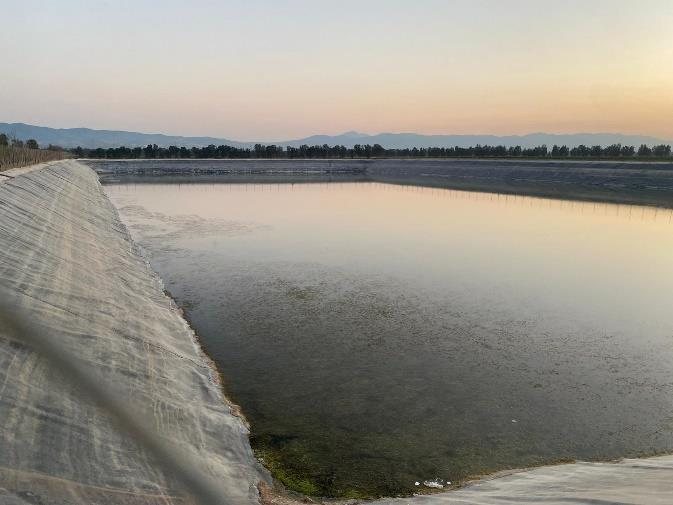
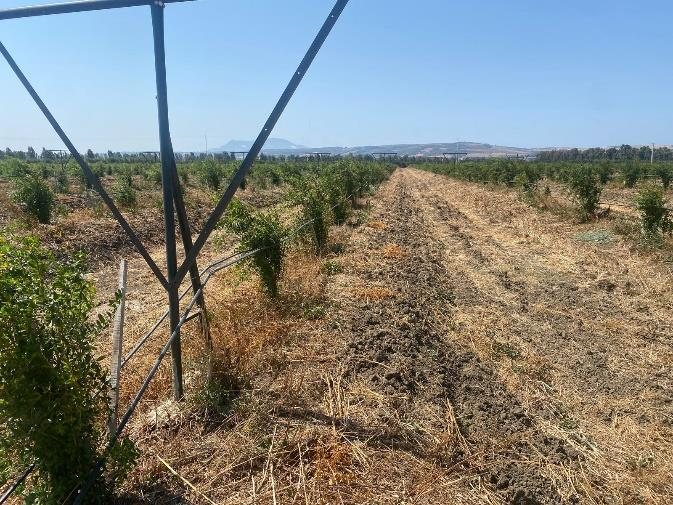
In August 2025, our team visited Sidi Moussa, in the Tipaza province, at SARL EL HILAL Development and Industrial Agriculture. The site: around 350 hectares of fruit trees (figs, apples, peaches, pomegranates), already fitted with drip irrigation, fed by a 200 x 100 x 12-metre irrigation reservoir and several boreholes.
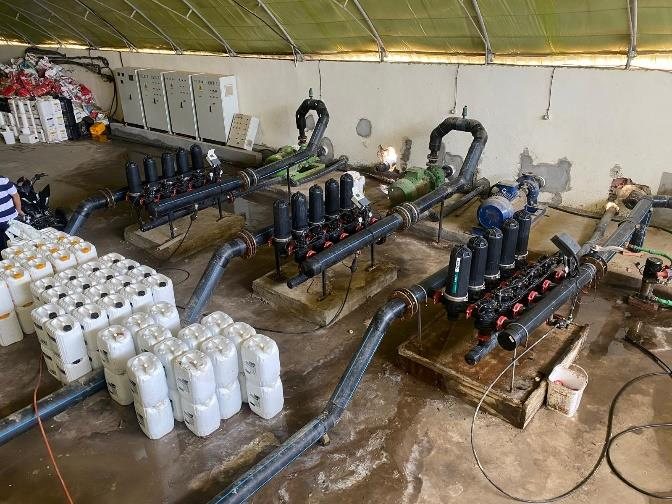
Three pump sets, with flow rates from 42 to 180 m³/h, irrigate the estate around four hours a day. Water Vital® was installed directly at the three pump outlets.
Result: up to −30% water consumption from day one, and up to −70% when combined with our water retainers.

Water Vital® for silage corn
From irrigation to animal feed quality
A field evaluation proposal for water management, root development and silage production.
Potential benefits to evaluate in your field
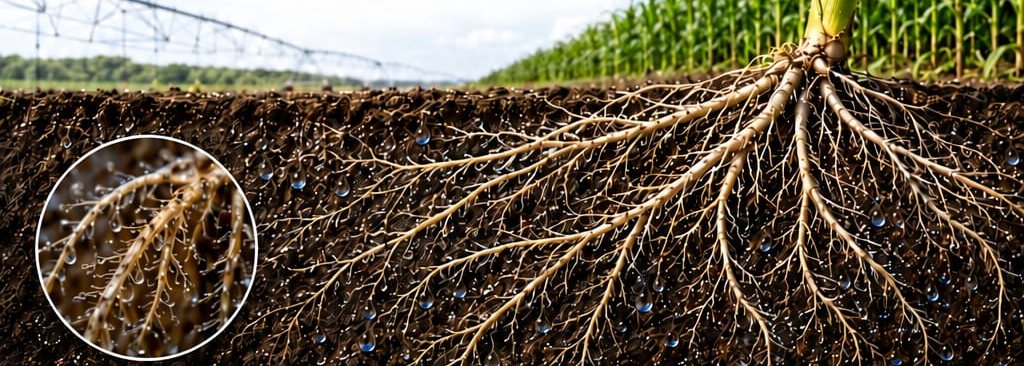
Root development
Evaluate root growth, fine-root formation and soil exploration.
Water and nutrients
Check root-zone moisture and plant nutritional status through leaf analysis.
Fertilizer efficiency
Test whether fertilizer inputs can be adjusted while maintaining yield and silage quality.
Irrigation management
Compare applied water volume, irrigation uniformity and production per cubic metre.
Forage production
Measure dry-matter yield per hectare and observe crop uniformity.
Silage quality
Analyse dry matter, starch, fibre, digestibility and fermentation quality.
How to verify the results
Compare areas with and without Water Vital®, using replicates and similar soil, hybrid and management conditions. Record water, fertilizer, yield and silage analyses. Evaluate each change separately.
Important: The specific effects of Water Vital® must be demonstrated through comparative trials. Do not reduce water or fertilizer without monitoring and agronomic guidance. Harvest timing, compaction and airtight sealing remain essential for good silage.
Application case · South Korea
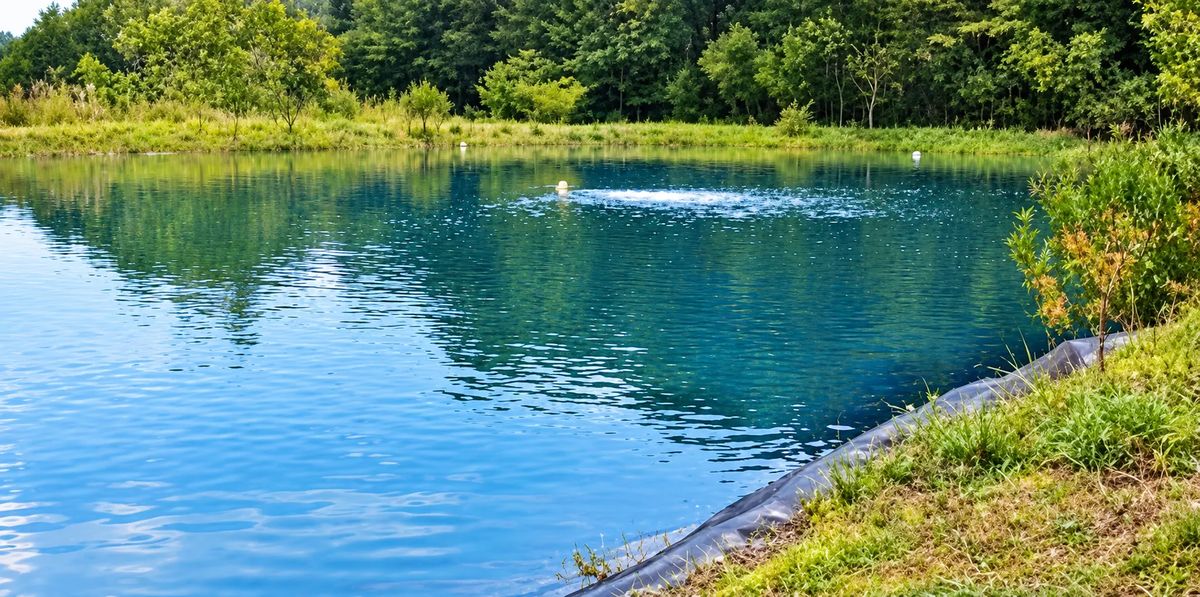
Green algae in the lakes of a golf course
A Green Solutions application report: a South Korean golf course, lakes overrun by algae, and a day-by-day observation.

The golf club
Opened for play in 2000, the number one ranking Gapyeong Benest Golf Club, in South Korea, is a prestigious Jack Nicklaus Signature Golf Course. The beauty of its rolling greens is maintained by irrigation from several lakes and ponds.
The algae problem
The lakes were both a beautiful element of the golf course landscape and a necessary water store for irrigation. Excessive algae growth was causing several problems:
- An increase in total suspended solids (TSS) and a decrease in biochemical oxygen demand (BOD), making the water unhealthy.¹
- Lower oxygen levels as the water environment slowly became deprived of oxygen.
- Shading that inhibited the growth of desirable aquatic plants.
- Clogging of water pumps.
- Odours caused by dead or dying algae.
- An unattractive appearance.
The problems were aggravated by higher temperatures and lower than usual rainfall.
Common algae controls
- Chemical controls, including herbicides and algaecides, copper sulphate and chlorine bleach, had been used in the past. However, these methods had undesirable consequences of their own.
- Fountains used to aerate and mix the water increased natural biological activity and reduced algae growth a little.
- Mechanical removal of algae required substantial labour.
The Water Vital® solution against algae
The use of non-toxic organic products in lakes and ponds has become very popular recently. It is a natural solution that does not require herbicides or algaecides; however, it involves ongoing costs and regular maintenance. That is why we opted for a non-toxic and entirely natural alternative requiring no regular maintenance, no energy and no consumables.
The solution was very simple. In the Water Vital® approach, two SAT “Softer Water Conditioners” were installed in the lake as a non-electrical, non-chemical catalytic water treatment. According to the source report, this process dissociates the chemical bonds in heavily mineralised water. This in turn removes the nutrients on which algae feed, and the algae die quickly. The algae are then removed from the lake, and the natural beauty of clear water soon returns.²
Application and observation
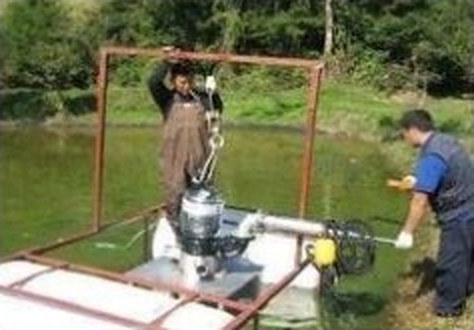 Installation
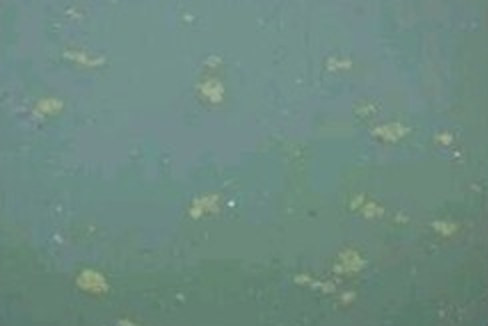 Day 2
 Day 6
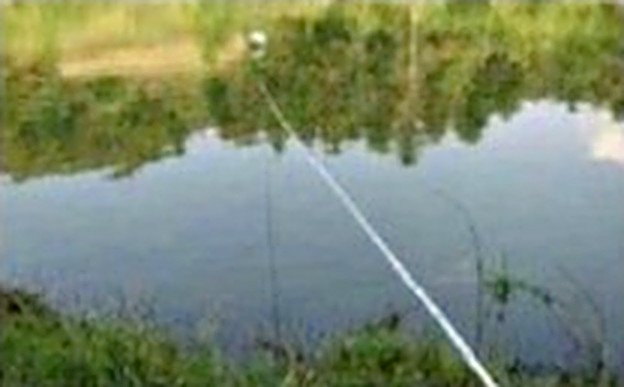 Day 8
The results
As can be seen, the results speak for themselves. A lake once heavily polluted by algal blooms has been restored to its original condition in a very short time. One of the Water Vital® “Water Restorers” remains in the lake to provide continuous water treatment.
Additional field observation on irrigated turf
An additional field observation reported that turf irrigated with Water Vital-treated water appeared healthier and developed a deeper green colour. This improvement may be associated with increased plant availability of soil minerals and greater uptake by roots. Soil and plant analyses are recommended to verify the proposed connection with mineral availability and uptake.
¹ The source report states a decrease in BOD. BOD and dissolved oxygen are different measurements; the technical explanation is in the assessment below.
² The mechanism and results are claims made in the source report. The device effect and the effect of pump-assisted cleaning were not measured separately. See the technical assessment below.
Photographs: Green Solutions application report.
Technical assessment and missing information
Supplementary assessment of the source report
The report describes visible improvement alongside mechanical algae removal. Completing the following details when preparing a new Water Vital pond application will support a sound assessment of the outcome.
Distinguishing BOD from dissolved oxygen
The source report lists a decrease in BOD among the causes of unhealthy water. BOD describes the oxygen consumed during biological decomposition of organic matter; dissolved oxygen describes the oxygen present in the water. A fall in BOD does not in itself mean an oxygen shortage. The author may have meant a decrease in dissolved oxygen. Original analytical data are needed for a definitive correction. [3]
Demonstrating nutrient removal
The explanation that dissociation of chemical bonds removes algae nutrients is not supported by nitrogen and phosphorus analyses in the report. A change in chemical bonds or mineral forms does not by itself demonstrate removal of total nitrogen and phosphorus from the water. A new application should record nutrient inputs, water measurements and the amount of algae removed. Excess nutrients, temperature and water movement should be assessed. [1, 2]
Separating the device and cleaning effects
The use of a submersible pump and three suction hoses shows that mechanical cleaning contributed to the reported outcome. The day 2, 6 and 8 observations relate to this combined application. The report does not specify how the 70% value was measured or its comparison baseline. Improved clarity is also different from an analytical result for nitrogen, phosphorus or microbiological suitability.
Completing model and operating details
The report uses the names SAT, Turbu-Flow and Water Vital. Record the device model, technical capacity and manufacturer details to establish its relationship to current Water Vital products. Using two devices in 4000 m³ does not establish that the same number is sufficient for another pond or model. Pump flow, installation location, depth, operating time and the follow-up period should also be added. Energy and maintenance assessment should cover pumps, aeration and cleaning equipment as well as the device module.
Supporting the turf observation with analyses
A deeper green turf colour alone does not prove increased mineral dissolution. Nitrogen and iron can affect turf colour, while soil pH affects nutrient availability. Water and soil require separate measurements; increased soluble nutrients in a pond may also nourish algae. [1, 5, 6]
Technical sources
- [1]EPA — What Causes HABs
- [2]EPA — Control Measures for Cyanobacterial HABs in Surface Water
- [3]EPA — Dissolved Oxygen and Biochemical Oxygen Demand
- [4]EPA — The Effects: Environment
- [5]Penn State Extension — Turfgrass Fertilization
- [6]University of Maryland Extension — Understanding Your Soil Test Report
Water Vital pond application plan
The proposed approach is to evaluate Water Vital in a measured trial combined with algae removal and reduced nutrient inputs. The objectives are less algae and pump clogging, improved water clarity and sustained improvement. Comparative measurements assess the contribution of the device.
Site assessment and installation
Record pond volume, surface area, depth, water inputs, algae abundance and circulation flow. Assess the inline model at a suitable section of an available circulation line, following flow, pressure and manufacturer installation requirements. Confirm the tank model’s suitability and capacity for immersion. Secure it without burying it in bottom sediment. Select device numbers from these site details.
Algae removal and prevention of recurrence
Remove surface algae and decomposing material using suitable collection or suction equipment, and record quantities. As decomposition consumes oxygen, monitor dissolved oxygen and provide appropriate aeration if required. Investigate and reduce nitrogen and phosphorus inputs from turf fertiliser, drainage, wastewater and organic debris to address the load that promotes renewed algae growth. [1, 2, 4]
Monitoring and comparison
Photographs and water measurements at the same locations are proposed at baseline and on days 2, 6, 8, 14, 30 and 45. Monitor dissolved oxygen and temperature more frequently at first, particularly early in the morning. If two similar, independent ponds are available, apply the same cleaning and aeration practices to both and install Water Vital in only one to compare its additional contribution. Before-and-after monitoring of one pond records the overall effect of the combined interventions.
| Indicator | Unit or record | Assessment |
|---|---|---|
| Algae abundance | Chlorophyll a or a suitable species count | Change in algae load |
| Clarity | Turbidity and Secchi depth | Change in visibility |
| Oxygen | Dissolved oxygen, mg/L | Maintenance of oxygen conditions |
| Nutrients | Total nitrogen and total phosphorus, mg/L | Change in nutrient load |
| Organic load | BOD and, where relevant, COD, mg/L | Tracking of degradable material |
| Operations | Amount of algae removed and clogging record | Cleaning and pump requirements |
The day 2, 6 and 8 times are observations from the source report. A completion time or removal percentage for a new application should only be committed to after site measurements have been completed.
Monitor turf colour, density and root development against an independent comparison area with the same irrigation and fertilisation conditions. Compare baseline and follow-up analyses of soil pH, available nutrients and nutrient concentrations in plant tissue.
Five branded technologies, and the agroforestry programme that combines them on land to be reclaimed.
More information