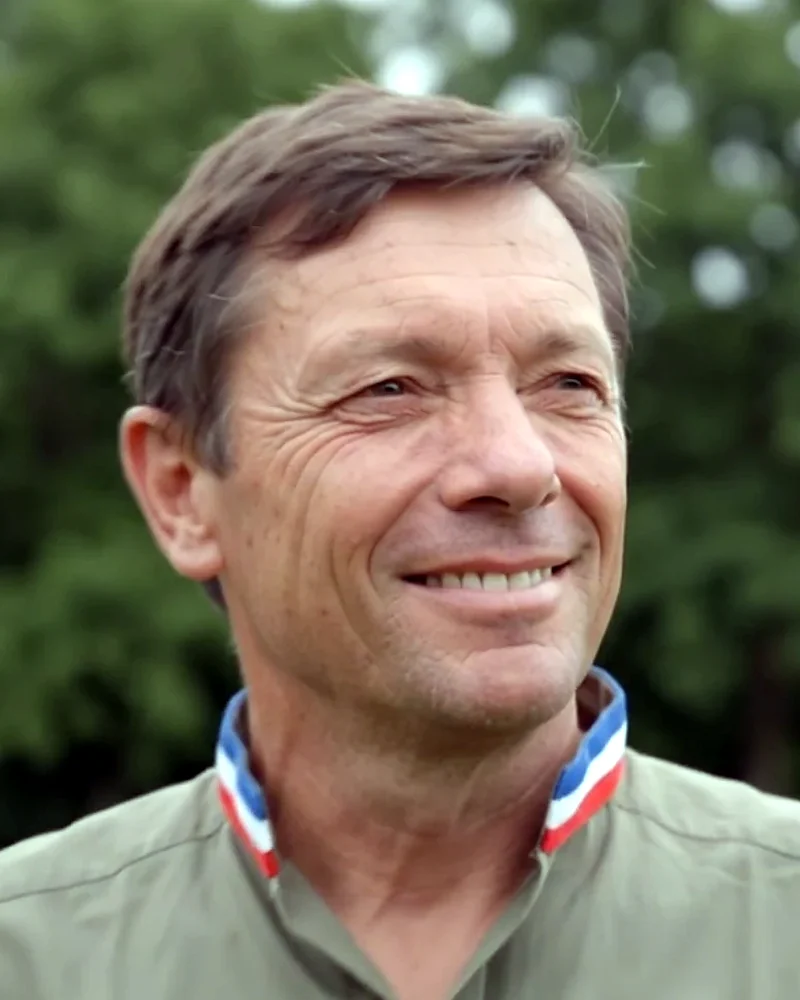
Michel-Paul Correa and Christian Carnavalet, in front of the Urban Market Gardening School. Photo: Gabriel Bonnat.
Our partner
A partner in the field
Green Solutions is working with Christian Carnavalet to bring agricultural technologies closer to everyday use. His urban market-gardening school in Cannes-La Bocca offers a practical setting: cultivated plots, trainees and support for setting up small farms.
Christian Carnavalet
Agronomist, landscape consultant and farmer, Christian Carnavalet was awarded the title of “Meilleur Ouvrier de France” in Garden Art in 1991.
He chairs the 3C Agro Conseil agency, which specialises in organic farming, soil biology and organic fertilisation. He also chairs the Institut Moreau-Daverne and the “Les Petites Fermes d’Azur” cooperative. He is also a market gardener, through the company “Les Fermiers Bio Associés”.
His books
Christian Carnavalet has published several books on organic farming and small-scale market gardening. He has also published “Biologie du sol et agriculture durable” in 2015, then a revised and expanded second edition in 2021.
Agriculture biologique, une approche scientifique3rd edition · France Agricole · 2024 · 620 p.
Le maraîchage sur petite surface : La French MethodÉditions du Terran · 2020 · 320 p.
Agriculture biologique, une approche scientifique2nd edition, revised and expanded · France Agricole · 2018 · 574 p.
Agriculture biologique : une approche scientifiqueFrance Agricole · 2011 · 472 p. · foreword by Claude and Lydia Bourguignon
The farm school
An urban market-gardening school
The Institut Moreau-Daverne contributes to training people for the farming sector, mainly market gardening in open field and in unheated greenhouses, with a wide range of produce. Its courses help people improve their performance, adapt to technological and economic changes, and meet quality requirements.
Alongside practical teaching that meets the demands of the trade, the Institut trains people in agronomy, botany, and the economic, financial and social management of a business, so that they can rise to positions of responsibility and, where possible, be supported in setting up as a farmer registered with the MSA.
As farming changes, the Institut also trains people in welcoming visitors to the farm and in events, and in opening up to the local area together with local elected officials.
The Institut promotes learning market gardening through the traditional French method (French Method) and the skills needed to run a small-scale market-gardening business. Its training is open to everyone. No prior farming knowledge is required.
Extract from the Institut Moreau-Daverne brochure, February 2022 edition.
Photo from the Institut’s brochure, February 2022 edition.
Teaching system
Training leading to the different qualifications offered by the Institut Moreau-Daverne focuses on professional practice, which makes up 85% of learning time in the long course, and on the short courses that lead to recognised professional levels.
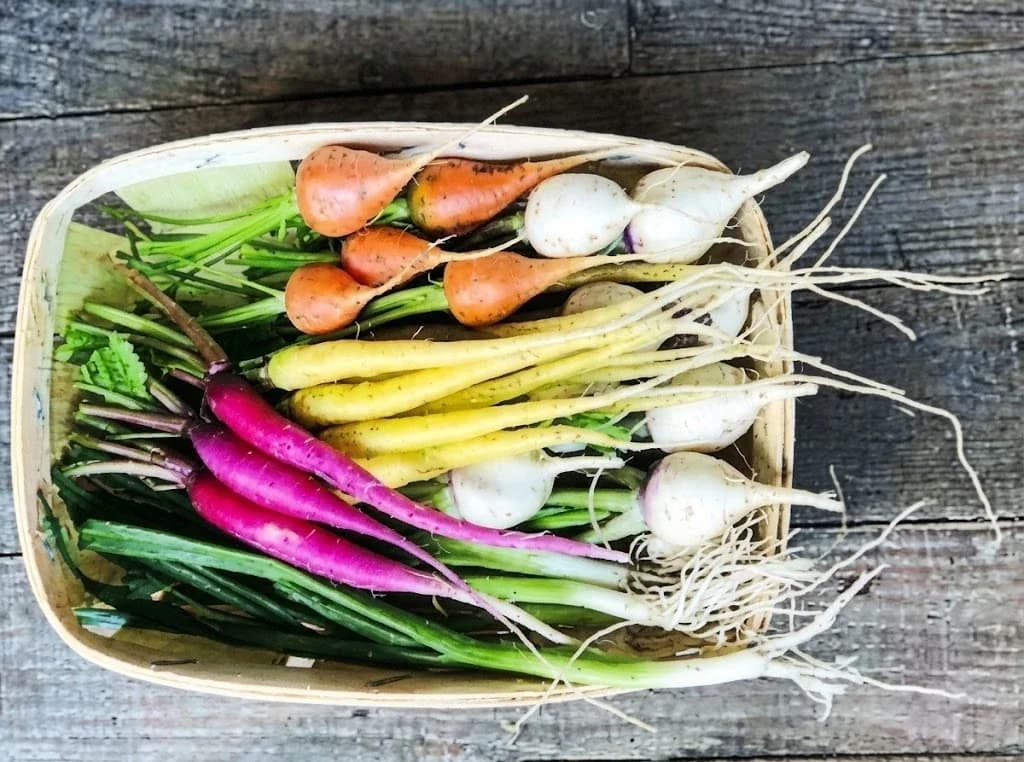
The training body supervises this practice within the host business “Les Fermiers Bio Associés”, which has 2 ha of land, including 1.5 ha divided into market gardens of 1,000 m² that trainees are responsible for, growing vegetables, edible flowers, mini-vegetables and aromatic plants. All the farm equipment, seeds, watering equipment and delivery transport, etc., is made available to the Institut for its practical training and for assessing trainees’ skills.
Training paths are individualised. To cater for the diversity of trainees, the training body offers placement assessments and tools at entry, so that candidates’ profiles are taken into account and course lengths can be adjusted.
Teaching is progressive, in the long course (one year), through levels No. 1 to 12. These match the job-recognition tools set out in the new national agricultural collective agreement of 15 September 2020, IDCC 7024. People who already hold a diploma or have agricultural training will have a shorter personalised path to becoming a business owner registered with the MSA.
The short courses introduce market gardening through the French Method and explain the steps needed to create a small market-gardening farm.
Distinctive feature
After a year of training, the Institut Moreau-Daverne lets trainees who wish to do so become small-scale market-gardening business owners and join a farm production cooperative. It helps them register with the MSA to obtain their SIRET number.
At every stage of your career, the Institut Moreau-Daverne’s courses can contribute to your personal projects:
Find a job in agricultural production or create your own business
Improve your skills and qualifications to progress in your trade and reach higher grades
Discover new approaches to market gardening: edible flowers, mini-vegetables, small fruit and orchards
Understand farm cooperation by joining, for a time, a producers’ cooperative, “Les Petites Fermes d’Azur”
The Institut Moreau-Daverne’s teaching project places each person in full professional immersion within small market-gardening businesses with companion planting.
Our commitments
Commitment No. 1: ensure a real understanding of how viable a small market-gardening business is under the traditional production method.
Through practical training in the field, in real production conditions.
Through theory on agronomy, botany, soil biology, cropping systems, and the economic, legal and social management of small farm businesses.
Long and short courses
Long course, one year:
1. Support the person in their learning, to build the skills and responsibilities needed for the job, as set out in the different levels of the national agricultural production agreement and of the Cuma agreement of 15 September 2020.
2. Help them set up their own business during their training.
3. Secure a city plot and their own local customers at the end of the course, if they decide to stay on site or in the PACA region.
Short courses: give trainees a full picture of the technical, economic, legal and local aspects of running a small market-gardening business in their area.
Note: all courses are open to people with mild hearing or visual impairments.
“Teaching can do anything, since it makes bears dance.” G.W. Leibniz
Our experience
Solid agronomic training and more than 50 years of professional practice.
Books and lectures on organic farming, soil biology and small-scale market gardening.
Running an agricultural cooperative and an association of organic farmers.
Original knowledge and continuous practice of the traditional market gardening known as the “French Method”, around the world for a century.
Close links with the regional business community, local elected officials and the administrations of the Sud PACA region.
Trainer training and training in Qualiopi support.
Our facilities
A 2.2 ha plot in Cannes, organic-certified (AB) by Ecocert, shared by several cooperating small-scale market gardeners, with fruit tree and edible flower plantings, table grapes, small fruit, greenhouses and farm equipment.
A 5,000 m² orchard in Cannes, with standard and half-standard fruit trees.
A 220 m² building for classrooms, with professional post-harvest equipment, and all farm and event equipment.
All manual and motorised farm equipment, tunnels, work and meeting rooms, organic inputs, seeds, sales equipment…
Information about the courses
Teaching objectives
Theoretical programmes
Practical programmes
Skills assessment tables
Organisation of training cycles
Certification of professional skills
Daily life at the Institut Moreau-Daverne
Practical life in the Cannes-Pays de Lérins area
Admission conditions for long courses
Fees, funding and sponsorship
Other information about the urban market-gardening school
Organisation of the institute
Institut Moreau-Daverne, Chemin de la Plaine de Laval, 06150 Cannes-la-Bocca.
E-mail: contact@moreau-daverne.fr. Websites: www.moreau-daverne.fr and www.agro-conseil-carnavalet.eu.
Administrative manager for information and registration: Christian Carnavalet
Educational manager for the training and programmes: Christian Carnavalet
Manager for disability and reception of people with impairments: Christian Carnavalet
Facebook: Les Petites Fermes d’Azur.
Photos: Institut Moreau-Daverne.
Photo from the Institut’s brochure, February 2022 edition.
65producers already trained
97 %of producers satisfied with the training *
March 2019opening of the continuing vocational training body
A passion for the trade. Energy. Time for passing on knowledge. Resources to support teaching.
Our partners
Pôle Emploi
Ville de Mougins
Balicco
Ville de Cannes
Communauté d’agglomération Cannes-Pays de Lérins
Mycophyto
La coopérative « Les Petites Fermes d’Azur »
L’agence 3C Agro Conseil
Le conseil départemental 06
Initiative Terre d’Azur
CIC
Banque Populaire Méditerranée
Aerial view of the site, from the February 2022 brochure.
The information in this section comes from the Institut Moreau-Daverne brochure, June 2026 edition. * Trainees who gave an overall satisfaction rating for the training since May 2021.
The method
The French Method
Originating in 19th-century Parisian market gardening, the French Method organises diverse production by making precise use of the available space and of the time between two harvests. Christian Carnavalet passes on its principles at the Institut Moreau-Daverne.
Image generated by AI, for illustration purposes.
Companion planting
The layout of plants takes into account their height, their growth rate and the space they occupy. Intercropping lets crops whose cycles complement each other grow together, instead of systematically reserving a bed for a single species.
Preparing the next crop
Nursery work and the planting calendar make it possible to plan successions. A harvest frees up space that new plants can occupy, depending on the season and growing conditions.
Building fertility
Organic matter holds a central place in the reference document. Its application, soil cover and crop organisation must be adapted to the characteristics of the land and the needs of the plants.
From small to larger areas
On a small farm, work can remain largely manual. The reference document also describes an adaptation to larger areas, with spacings and an organisation compatible with mechanisation. Changing scale means rethinking circulation, harvesting and logistics, without losing the logic of companion planting.
Photos: Institut Moreau-Daverne.
Our products
Our products in the field
Our partnership with Christian Carnavalet links knowledge of crops with the use of Green Solutions products. The Institut Moreau-Daverne is listed on our site among the pilot trials in market gardening with ECOSORB® and ECOFERT®.
ECOSORB® and water management
The use studied concerns the retention of part of the water in the treated zone and its availability to crops. Dosage, placement and depth of incorporation must be defined with the technical department, taking into account the soil, rooting and irrigation.
ECOFERT® and crop nutrition
ECOFERT can be integrated into a nutrition programme built on the needs of the crop. Its use should be reasoned alongside the fertilisation practices already in place, rather than added automatically to every growing plan.
A place for EVERGREEN, depending on the project
EVERGREEN is part of our range of water-retention solutions. It may be considered for projects where its formulation and method of application are suitable.
Observe before generalising
The water applied, the marketable yield, quality and working time make it possible to assess whether a treatment is worthwhile. Comparisons must involve comparable crops and conditions, with an untreated control zone. Results will be presented with their context, date and protocol when they become available.
Using the products is part of a broader growing method. It does not replace soil preparation or the organisation of rotations, sowing and harvests.
A cooperative that welcomes newly established market gardeners. It lets them sell their produce straight away and take on their new trade more easily.
An ideal farm responds to its territory. It takes into account the water available, the land, the people who work there and the customers it will sell to. Our ambition with Christian Carnavalet is to bring these elements together from the design stage of the project.
Start from the ground
The first step is to examine the soil, water resources, the climate and access to land. The crops sought and the skills available are then specified. A small peri-urban farm and a mechanised operation do not require the same organisation.
Design a workable farm
The layout of beds, the nursery, circulation routes and the areas for preparing harvests must make daily work easier. Water management and organic inputs are planned at this scale, in line with the growing calendar.
Train and test
A first plot makes it possible to check crop choices and how the products are applied. It also serves to pass on techniques, identify difficulties and adjust the organisation before extending the set-up.
Prepare for sales
The harvest calendar must meet real demand. Direct sales, a local wholesaler or contract catering do not involve the same volumes or logistical requirements. The business plan must take these constraints into account from the start.
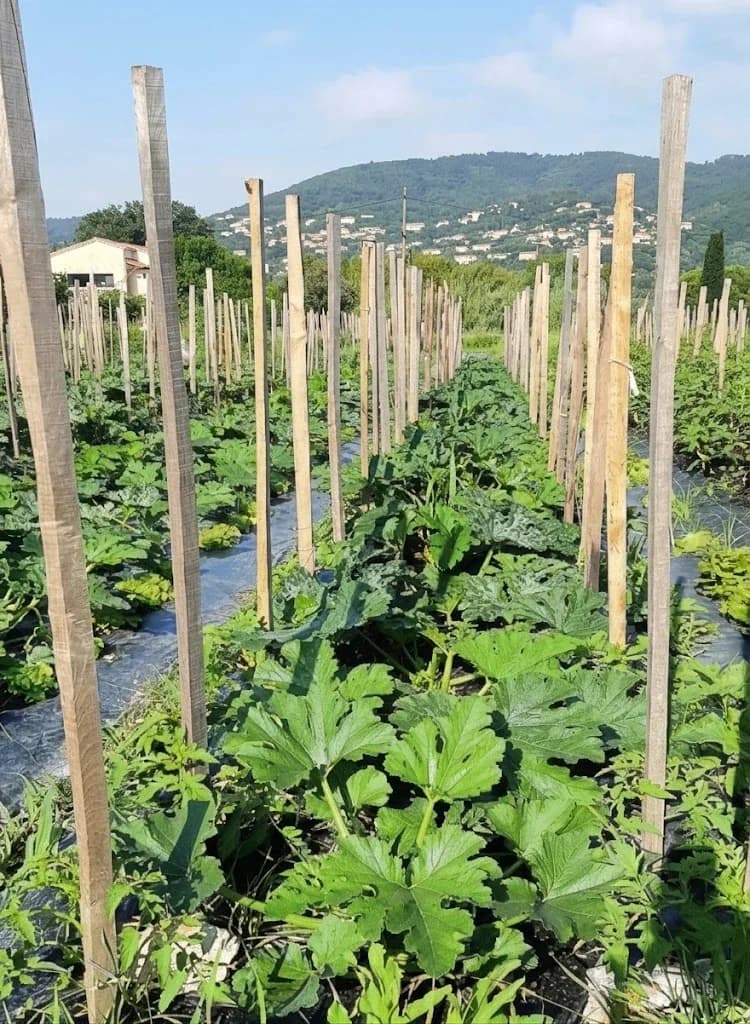
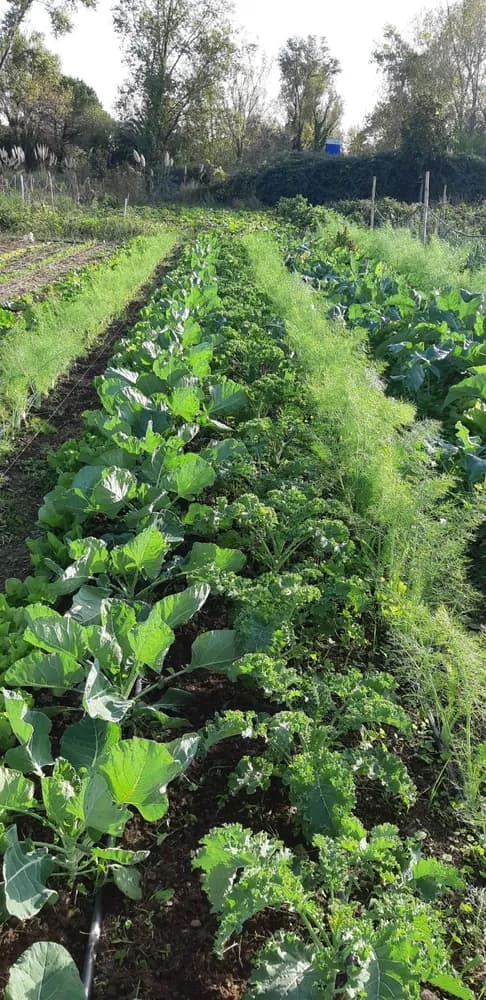
The crops and greenhouses of the farm school in Cannes. Photo: Olivia Chaber.
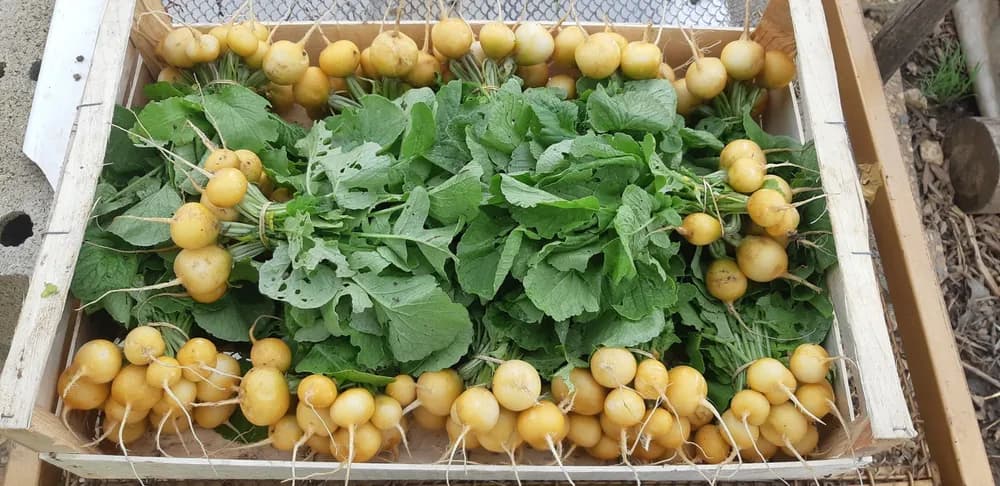
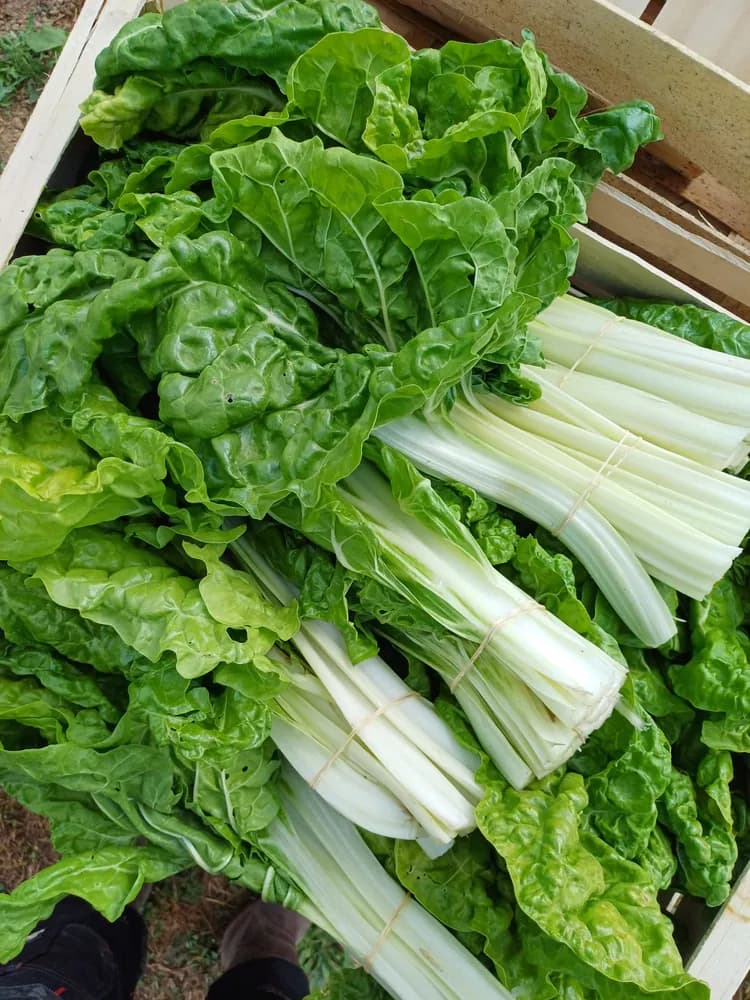
These views document the site, its production and its organisation. They are not before/after photographs and are not evidence of the performance of Green Solutions products. Photos: Olivia Chaber, used with her permission.
Gallery
The kitchen garden, in pictures
Illustrative photosIllustrative photos
Questions
Understanding and preparing your project
Image generated by AI, for illustration purposes.
Is a large area needed?
The French Method is particularly associated with market gardening on small areas. The reference document also describes an adaptation to large areas. In both cases, feasibility depends on the land, the labour available and the outlets.
Do the products replace the method?
They address specific needs, in particular water management and nutrition. Their place is decided within the whole growing plan, with the technical department and the project managers.
Are incomes guaranteed?
Incomes depend on the crops, the climate, costs, working time and sales. The figures quoted around the French Method must be read together with their assumptions and context: they do not guarantee any income for a new farm.
Let’s talk about your farm
Are you preparing a set-up, an expansion or a training course?
Tell us the country, the area you have in mind, the crops and the water resources. We can arrange a first discussion about the practical conditions of your project.